Resources

Client Alerts, News Articles, Blog Posts, & Multimedia

Everything you need to know about BMD and the industry.

Your Golden Chance for H-1B Lottery Registration - March 2026

Client Alert
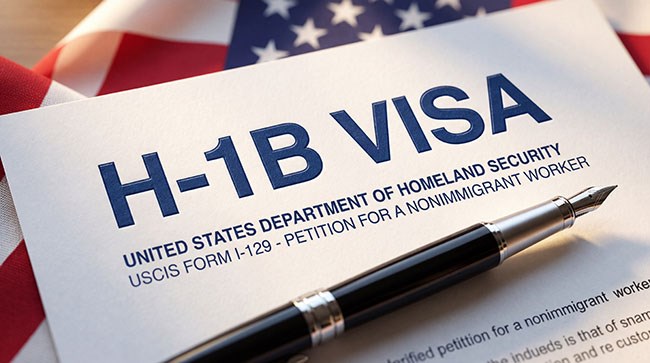
U.S. Citizenship and Immigration Services (USCIS) will open initial H-1B registration at noon Eastern time on March 4, 2026, and will remain open through March 19, 2026.

$100,000 Fee Not Applicable to Change of Status H-1B Petitions:

If you already reside in the U.S. in a valid nonimmigrant status (F-1, F-2, H-4, J-1, O-1, O-2, TN, etc.), and your employer files an H-1B change of status petition, you will not be subject to the proposed $100,000 fee. This fee is intended to discourage certain overseas registrations/filings and is cost-prohibitive for employers to sponsor workers who do not reside in the U.S.

Further, the new H-1B rule of implementing a weighted selection process will generally favor the allocation of H-1B visas to higher-skilled and higher-paid employees, while maintaining the opportunity for employers to secure H-1B workers at all wage levels. This rule benefits physicians, engineers, and other skilled workers paid in Wage Levels 3 or 4 by increasing their chances of being selected in the H-1B lottery, in addition to advanced U.S. degree selections.

Why This is Significant for U.S.-Based Foreign Nonimmigrants:

If you are currently in the U.S. on F-1 OPT/STEM OPT or another valid nonimmigrant status, this year may offer:

  • Reduced financial barriers for employers sponsoring you.
  • Potentially higher selection probability (especially if you qualify for advanced degree or higher wage levels).

In short, if you legally reside in the U.S., this year is your golden chance of being selected in the H-1B lottery.

If you wish to submit employee names in the H-1B lottery, please contact BMD Member Duriya Dhinojwala at dd@bmdllc.com to discuss your options.  


RNs and APRNs Take Note: Ohio Board of Nursing Mandates a New CE Reporting Period

Ohio’s Board of Nursing has updated the continuing education reporting period for RNs and APRNs. Beginning March 26, 2026, CE credits must be completed between July 1 and June 30 of odd-numbered years, replacing the previous November to October timeframe.

Ohio Med Spas: Peptide Do's and Do Not's

Recent guidance from the Ohio Board of Pharmacy outlines key compliance requirements for med spas using peptides. While some peptide drugs are FDA approved, others are not or cannot be compounded. Med spa operators should ensure they source medications from licensed suppliers, avoid non-approved or “research use only” products, and follow all compounding and storage regulations to maintain compliance and avoid enforcement actions.

Substance Use Disorder Providers: 42 CFR Part 2 Now Enforceable

Updates to 42 CFR Part 2 are now enforceable, bringing significant changes to how substance use disorder (SUD) records are handled. The Final Rule aligns Part 2 more closely with HIPAA, introduces updated penalties, allows a single patient consent for treatment, payment, and operations, and adds new requirements for Notices of Privacy Practices. It also creates a formal definition of SUD counseling notes and imposes strict consent requirements for their use and disclosure. Providers should review and update policies to ensure compliance.

AAA Introduces AI-Assisted Arbitrator for Certain Disputes

The American Arbitration Association has introduced an AI-assisted arbitration platform designed to streamline certain document-based disputes. While a human arbitrator still makes the final decision, the technology can improve efficiency, reduce costs, and accelerate case resolution. Companies should weigh these benefits against considerations such as transparency, risk, and contractual requirements before adopting AI-assisted arbitration.

Quiet Hours Texts and TCPA Claims: Consent Remains King as Courts Divide on Text Messages

Businesses face increasing TCPA lawsuits over off-hours marketing texts, but recent court decisions highlight strong defenses. Clear consumer consent and updated terms and conditions can defeat many claims, while a growing number of courts are finding that text messages are not “telephone calls” under the statute. Proactive compliance measures, including clickwrap agreements and forum-selection clauses, are critical to reducing risk.